

Driving in the snow in Norway
Guidelines, Rules, Safety Tips, and Tourist Advice
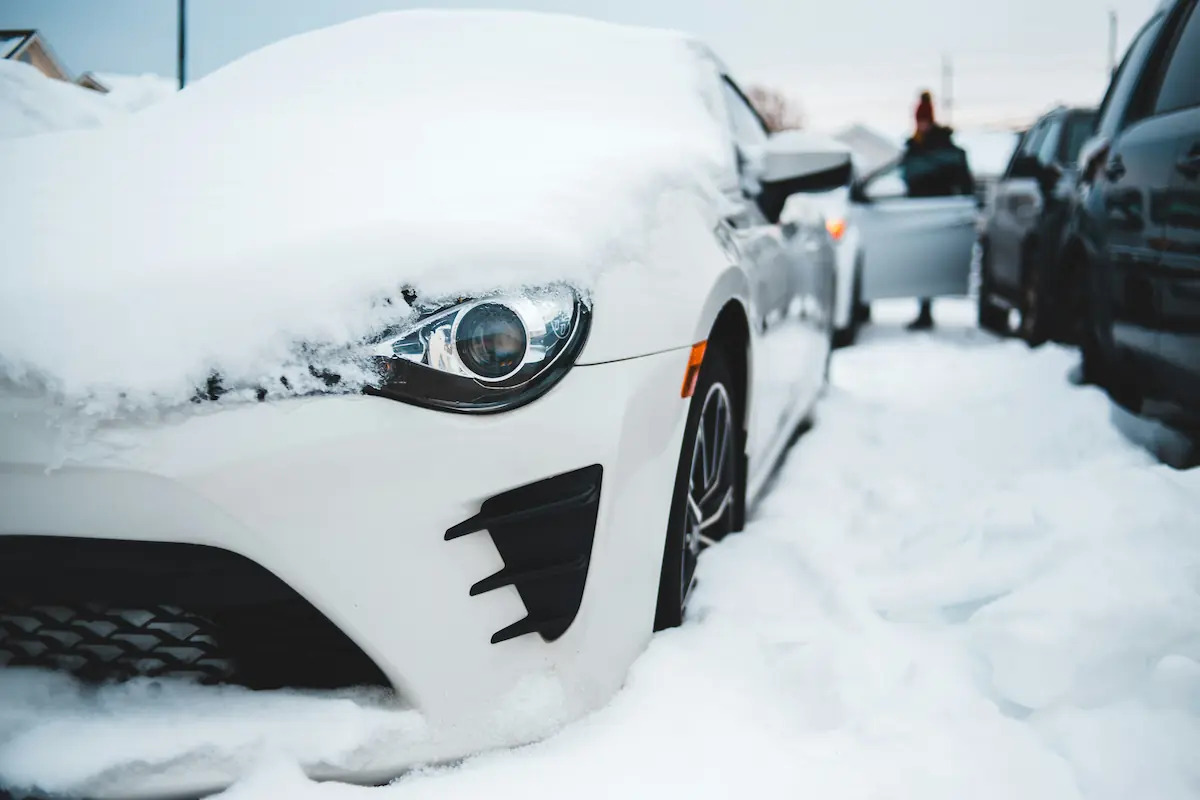
Photo by Erik Mclean on Unsplash
At NorthernShots, our tours are driven on Norway’s icy and snowy roads every winter, and we know firsthand that winter driving can be challenging. Some of our customers feel nervous about navigating snowy roads, but with careful planning, understanding local rules, and bringing the right equipment, it can become a safe and unforgettable experience. Here are some of our tips:
- Don’t rush anything. Do things calmly and if you are in trouble, ask for help!
The road assistance nr is often written in the dashboard of the vehicles, right on top of the radio. Otherwise look in the glove box. - Take your time to clear the snow from the driveway before driving. If you miss a tool to remove snow, neighbours often have big shovels in front of their houses as well.
- There are many cars in the parking lots and the just take their time to clear and prepare the driveway before starting to drive to work.
- The car should come out slowly. Don’t rush it.
- All vehicles are equipped with chains. You find them in the trunk. It takes 5min to install them but you need to know how to do that. If you don’t: here is a video that shows how to put the snow chains: https://www.youtube.com/watch?v=H0fIfx8yPkI
- The chains do not help if the driveway is not clear from snow. Otherwise you will be crashing into hard snow or hidden ice blocks on your way out, causing damages to the vehicle.
- Using gravel or sand under the wheels does not help in snow conditions, because they sink into the snow. It may help in icy conditions but chains are more effective.
- Winter brings us periods with over one meter of snow around the cars. And you will also find other days that the roads are completely icy and slippery. Guides and drivers must be prepared for this. Stay calm and take your time. Remember that you are not alone – All neighbours go in-and-out of their parking lots as they need to go to work daily, in any weather conditions. Ask for help/assistance if need be.
- Chains are a good option to ensure good grip when needed, but don’t rush the operation and don’t use them under high speed. They are supposed to be used mostly during parking operations or short routes at low speed.
- When you are out of a parking lot/or back on the road, avoid steep hills if possible. If you struggle or are afraid, use the chains until you finish the hill or that small dangerous route.
Some roads may close during winter due to snow or avalanches.
Always check Statens Vegvesen or Yr.no for real-time updates.
Winter Tire Laws in Norway
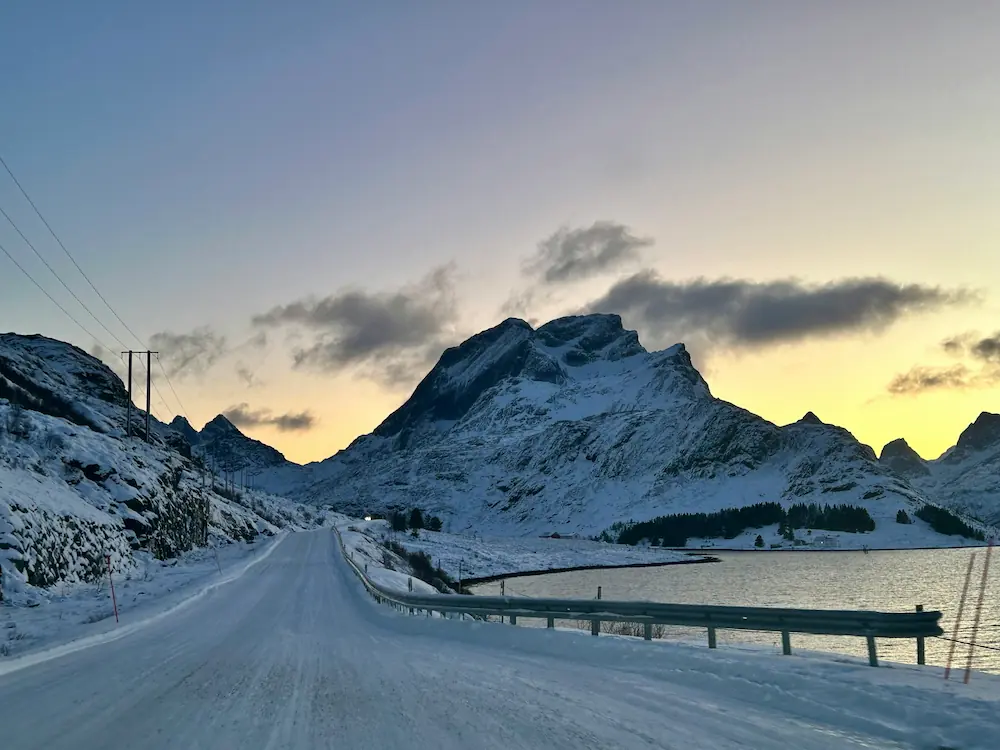
Norway enforces strict winter tire regulations. The main rule is: You are yourself responsible to ensure that your vehicle has the proper tires according to the weather conditions. In other words you are not allowed to drive with summer tires on roads with snow or ice. There is a winter tire period from the 16th of October and the 1st of May (County: Norland, Troms & Finnmark). You are only allowed to use winter tires within this period. BUT, there is an exeption to this; if conditions say otherwise, you need to have winter tires to drive.
In Tromsø it is not advised to drive with non-studded winter tires as a novice winter driver.
Studded Tires
Studded tires provide extra grip on icy roads, especially in mountainous regions.
They are legal during the winter tire period but may be restricted in some cities to reduce road wear.
Most rental cars in Tromsø include studded tires. It will be rare to get a vehicle with non-studded tires here. Just double-check before driving. You will need studded tires as there are many steep inclines on the Tromsø Island as well as the surrounding landscape.
- Minimum tire pattern depth is 3 mm.
Non-Studded Winter Tires
Non-studded or friction tires are allowed in areas with milder winters or regions with flatter inclines on the roads.
Ensure tires are labeled for winter use and meet Norwegian standards.
- Minimum tire pattern depth is 3 mm.
Remember that you as the driver are responsible for checking that the car has the proper equipment. Driving without appropriate winter tires can result in fines or insurance issues. Always verify your rental car’s equipment.
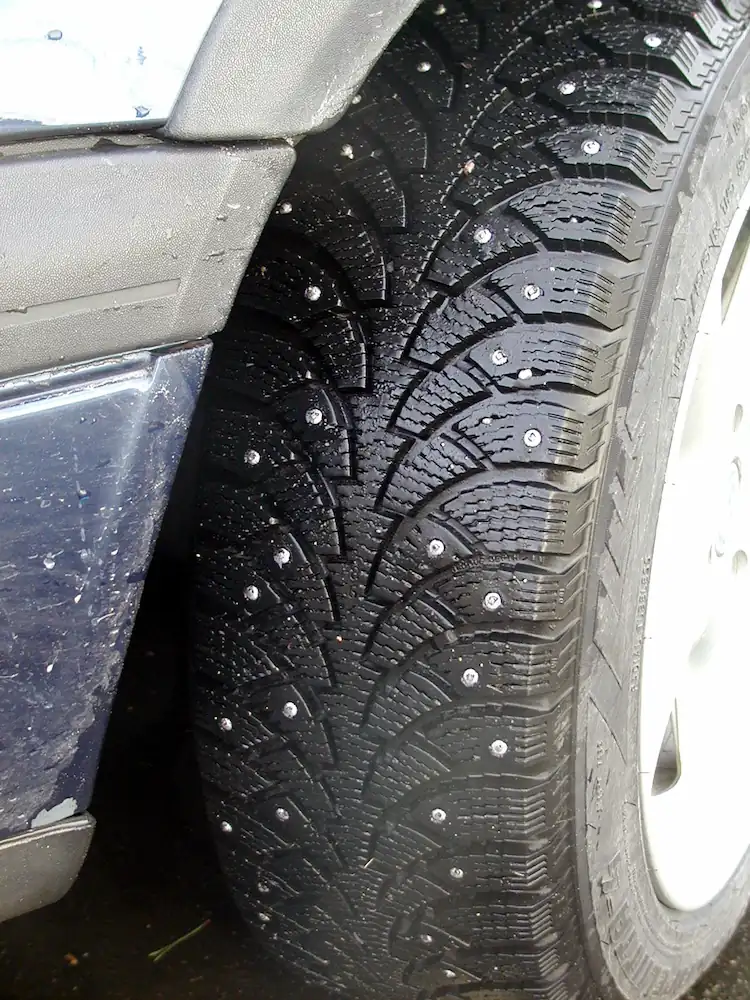
Photo by Kantor J.H on Wikipedia
Essential Safety Equipment
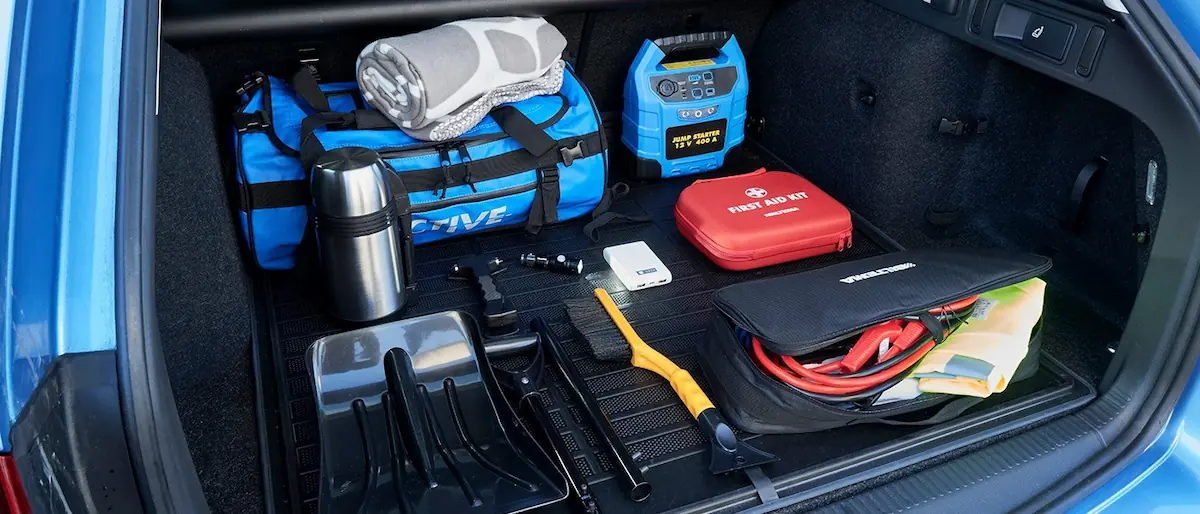
Photo by Biltema
Items required by law:
At least 1 reflective vest that is easily accessible, preferably for all passengers.
- Warning triangle
Highly recommended items:
First aid kit
Snow suit or equivalent + good outdoor clothing, gloves, hat and scarves
- Battery pack for charging phones
Optional but recommended gear:
Snow chains for the tires
Warm blankets, extra food, and water
shovel
Jumper cables
Torch
De-icer spray
Car tools like jack, braker bar + general tool kit
Tow rope
Understanding Road Conditions
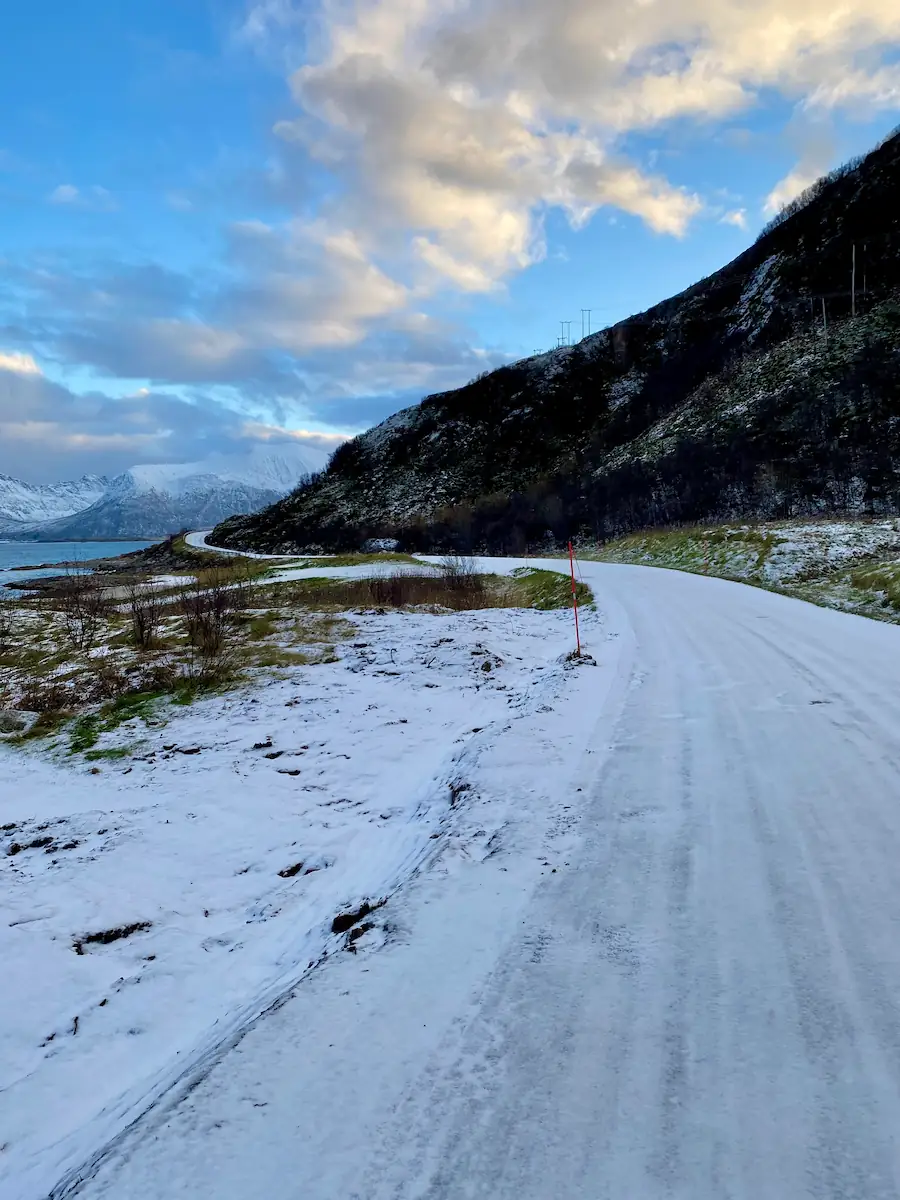
Photo by Sjur Hassel
Snow and Ice
Fresh snow or black ice makes roads slippery.
Avoid sudden braking or sharp turns — use smooth steering and acceleration.
- When braking, pump brakes repeatedly instead of locking them, then steer smoothly away from the obstacle in front of you.
Mountain Roads
Some roads close during winter due to snow or avalanches.
Always check Statens Vegvesen or Yr.no for real-time updates.
Visibility
Short winter days and snowstorms reduce visibility.
Keep headlights on at all times; it is legally required in to have low or dipped headlights on at all times in Norway.
- In fog use the foglights and drive slowly.
Handling Emergencies
Skidding
Turn the steering wheel into the skid
Avoid hard braking. Pump brakes repeatedly instead in as much a controlled manner as possible.
Accelerate gently to regain traction. If you start spinning release accelerator pedal until you get a grip again.
Getting Stuck
Use a shovel and traction mats if you have.
Clear snow around tires before attempting to get loose.
- Use chains if you can not get out.
Roadside Assistance
Most rental companies provide 24/7 roadside support
Keep contact info accessible
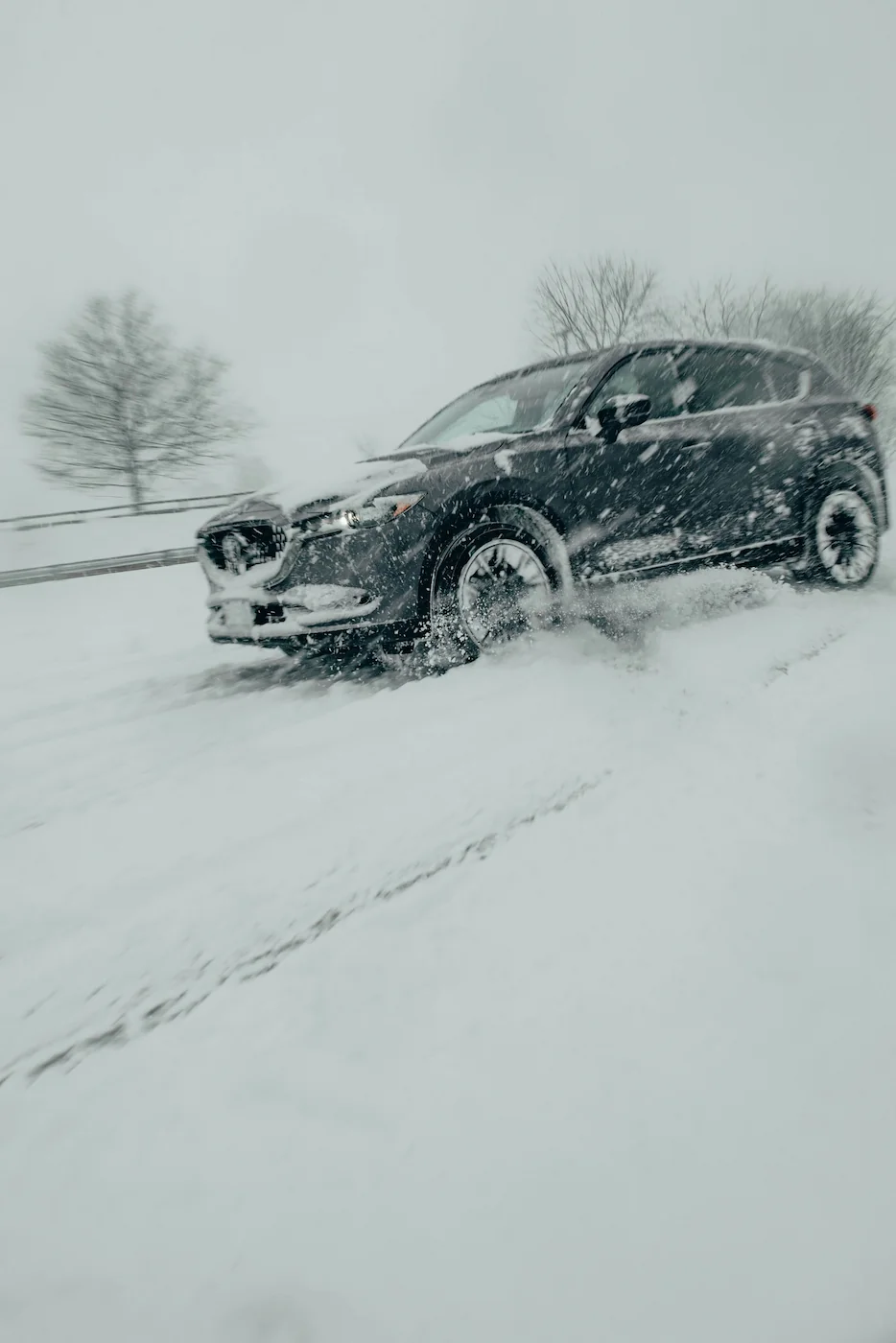
Photo by Nima Sarram on Unsplash
Regional Considerations
Coastal Roads: Often icy and wet, but snow accumulation is lower
Inland & Mountains: Expect deep snow and occasional road closures
Northern Norway: Short daylight hours; polar night can affect visibility
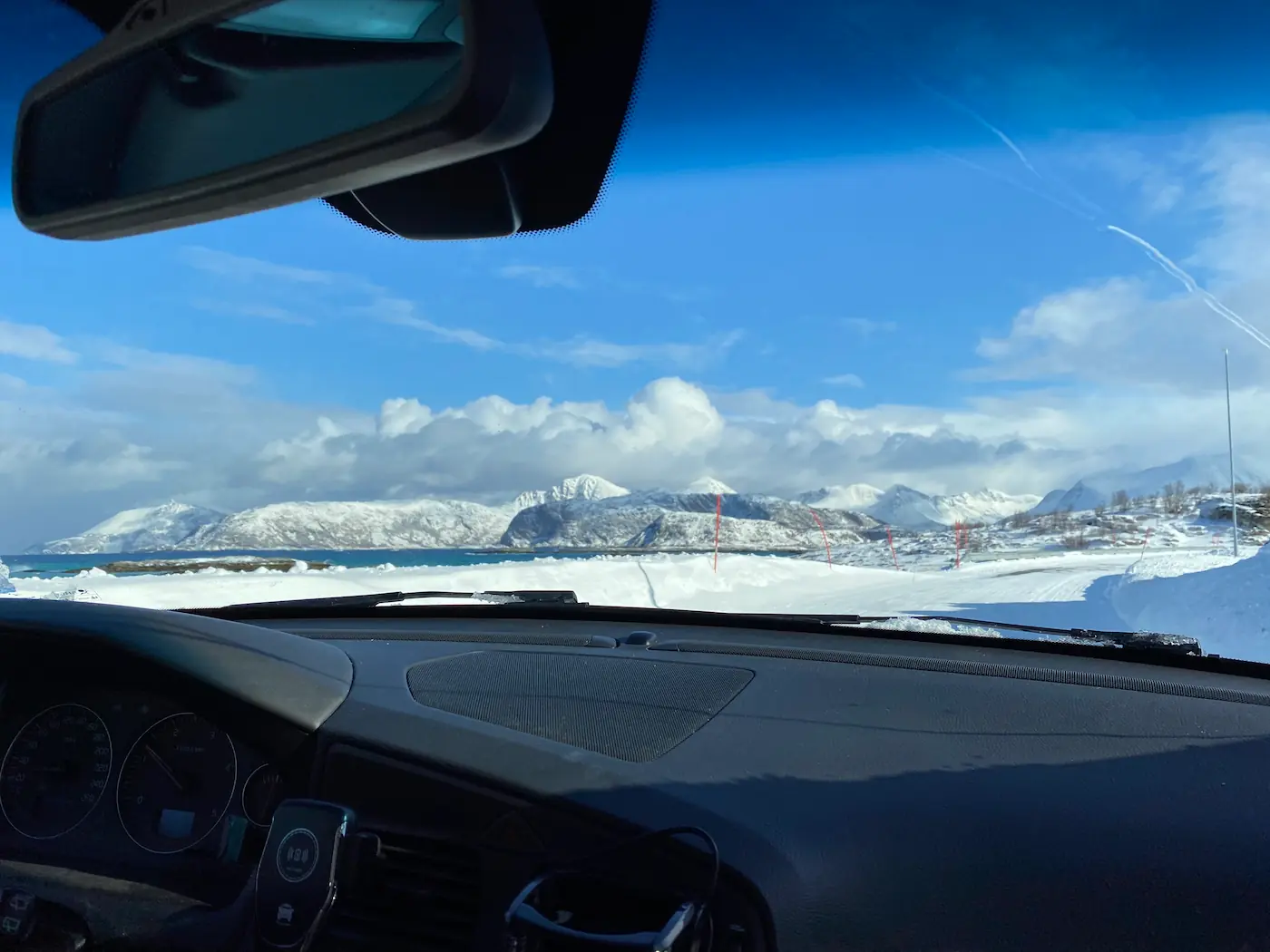
Photo by Sjur Hassel
Tips for driving in Tromsø in the winter
• Always let plowing trucks pass and get through. Never drive passed them no matter what!
• Emergency blinkers are for emergencies only, not for running into a shop and getting something because you couldn’t find parking.
• The orange plastic poles with reflexes on the side of the road are for the plower trucks to know where the road is. Never remove any of these poles. These often save lives and are not to be touched!
Helpful Links
Weather conditions – Yr.no
Cloud conditions – Meteologix
Road assistance:
NAF: +47 08505
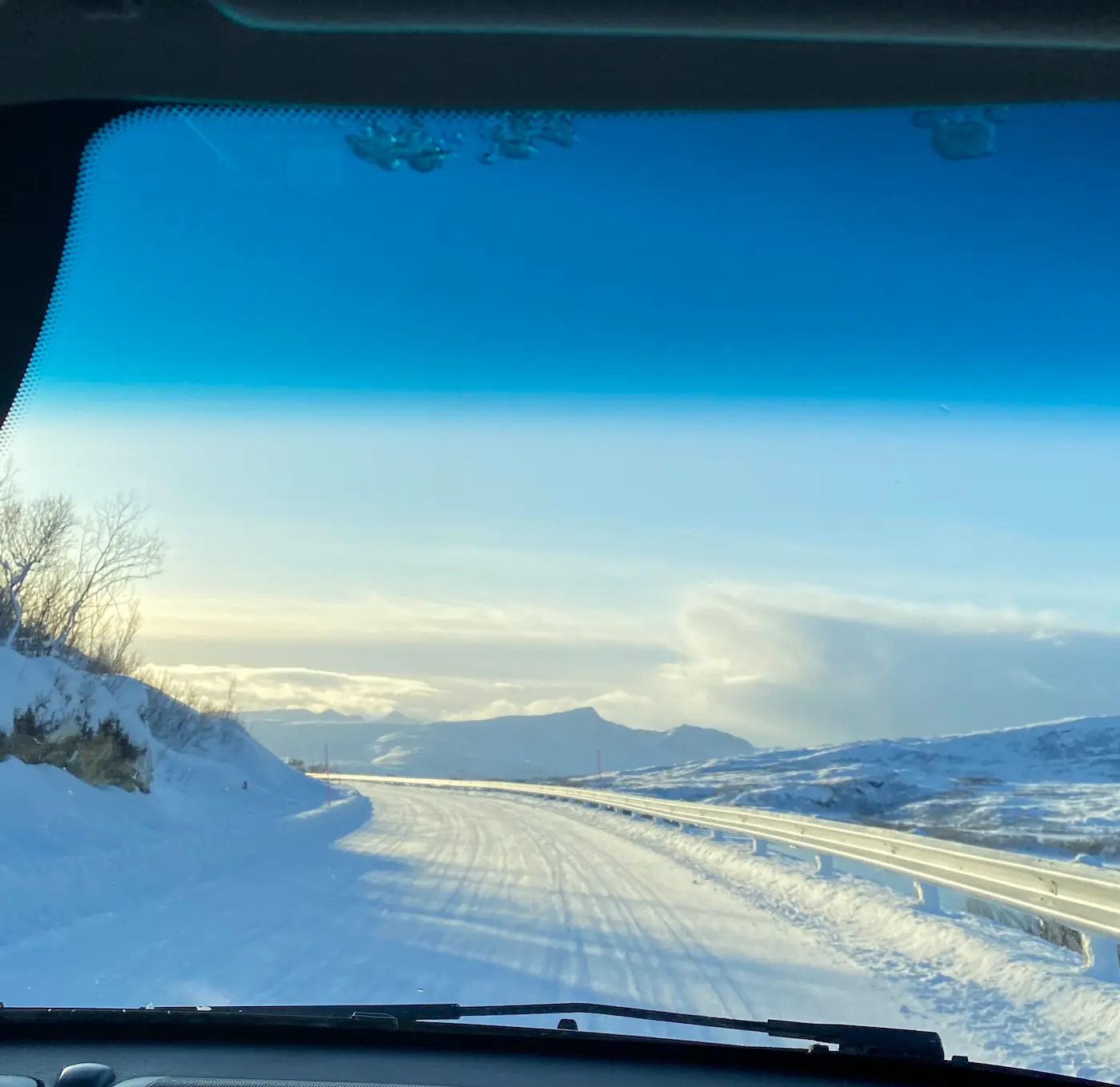
Photo by Sjur Hassel